













Quick Summary
Saving energy with your HVAC system does not mean living in an uncomfortable home. The most effective approach combines smart thermostat use, consistent professional maintenance, proper insulation, and confirming your system is correctly sized and operating as intended. Small changes and regular upkeep can reduce monthly energy costs in a meaningful way without affecting the comfort your household relies on. Learning how to save energy in HVAC systems starts with understanding how each part of your home and system works together.
Energy costs are a real concern for most homeowners, and the HVAC system is almost always the biggest contributor to monthly utility bills. Understanding how to save energy in HVAC systems is particularly valuable for homeowners relying on AC services in Fayetteville, NC, where summer cooling demands are intense and heating costs during winter cold snaps add up quickly.
The good news is that real energy savings do not require sacrificing comfort. They come from the right combination of maintenance, smart usage habits, and a system that is set up to perform efficiently over time.
Start With a Properly Maintained System
No energy-saving strategy works as well as it should on a system that isn’t properly maintained. An HVAC unit with dirty coils, low refrigerant, worn components, or restricted airflow must work harder to reach the same level of comfort. That added strain leads directly to higher energy use.
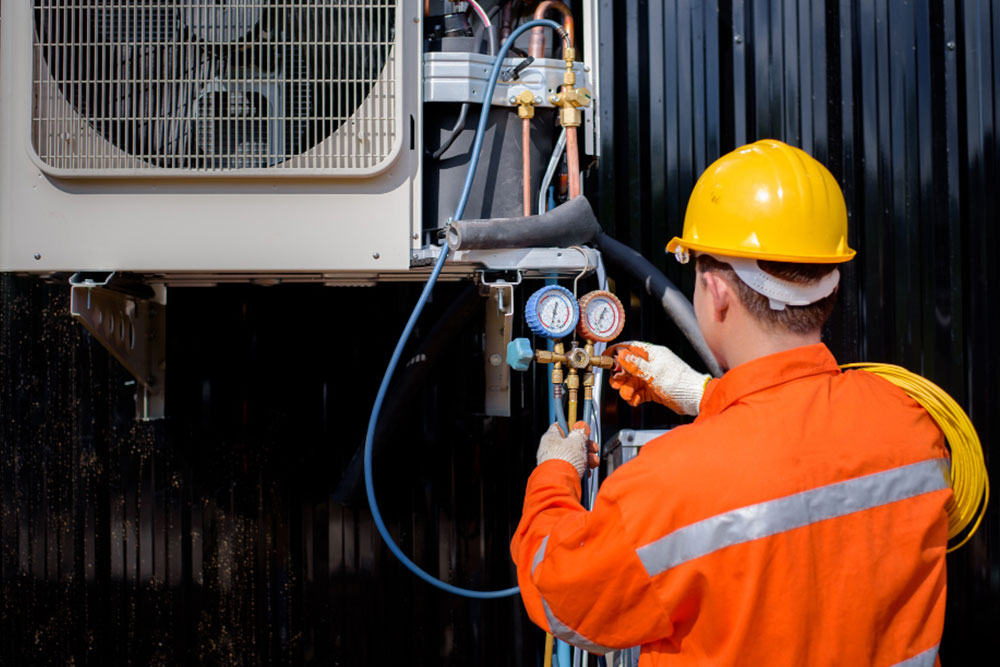
Regular professional maintenance creates the foundation for efficiency. A licensed technician cleans coils, checks refrigerant levels, inspects electrical components, and confirms everything is operating within proper limits. This process gives your system the best chance to run efficiently before any other improvements are made.
Think of it as addressing the root of the problem first. Adjusting settings on a system that is already struggling will not deliver meaningful results. A well-maintained unit is the starting point for anyone serious about how to save energy in HVAC systems.
Use Your Thermostat More Strategically
Your thermostat has a direct impact on how much energy your system uses. Small adjustments can lead to noticeable savings without affecting everyday comfort. Setting the temperature slightly higher during summer or slightly lower during winter when the home is empty or during sleep hours reduces system workload.
Programmable and smart thermostats make this process easier. Instead of adjusting settings manually, these devices follow a schedule or adapt to your habits. The system runs when needed and scales back when it is not, which leads to steady energy savings over time.
Homes that still rely on older manual thermostats often miss out on these benefits. Upgrading to a programmable or smart thermostat is a simple step that improves both efficiency and convenience.
Address Airflow and Insulation Issues
An HVAC system can only perform as efficiently as the home it operates in. Poor insulation, air leaks, and inefficient ductwork force the system to run longer than necessary.
Sealing gaps around windows, doors, and other openings helps keep conditioned air inside and outdoor air out. During hot summers in Fayetteville, this reduces the amount of heat entering the home. In colder months, it limits heat loss and reduces the strain on the heating system.
Ductwork is another important factor. Leaky ducts are a common source of energy waste in many homes. Air that escapes into attics, crawl spaces, or wall cavities never reaches the intended rooms. This forces the system to run longer to make up for lost airflow.
A professional duct inspection can identify leaks and inefficiencies. Fixing these issues can make a noticeable difference in both comfort and energy use.
Make Sure Your System Is the Right Size for Your Home
An HVAC system that is not properly sized for your home, either too large or too small, will never perform as efficiently as one that matches the space it is designed to condition. This detail is often overlooked, yet it plays a major role in both energy use and overall comfort.
An oversized system heats or cools the home too quickly, which leads to frequent on-and-off cycles that never complete a full run. This short-cycling wastes energy, creates uneven temperatures, and adds unnecessary strain to system components. An undersized system faces the opposite issue. It runs almost nonstop in an attempt to reach the desired temperature, using energy continuously while still falling short of consistent comfort.
Proper sizing depends on a detailed load calculation that considers your home’s square footage, insulation quality, window placement, ceiling height, and local climate conditions. If your system was installed without a thorough evaluation, or if your home has changed over time, it is worth having a professional assess whether your current system is still the right fit.
How Air Pro Heating Air and Electric Can Help
At Air Pro Heating Air and Electric, we help homeowners get more out of their HVAC systems while keeping energy costs down. As a veteran-owned, locally operated business, we stay committed to our community and focus on making every home we service as comfortable and efficient as possible.
Give us a call or book your service online today.
FAQs
Keeping your system properly maintained through annual professional service has the greatest impact. A clean and well-adjusted system runs more efficiently and uses less energy to maintain comfort. Pairing maintenance with smart thermostat use and strong insulation leads to the best overall results.
Yes — letting your home’s temperature rise during unoccupied hours means your system runs less throughout the day, which directly reduces energy use. A smart or programmable thermostat makes this automatic, so comfort is restored before you even walk through the door.
High energy bills, uneven temperatures, a system that runs constantly without reaching the set temperature, or a unit that’s more than 10 years old are all warning signs. A professional evaluation is the most reliable way to get a clear picture of how your system is performing.