












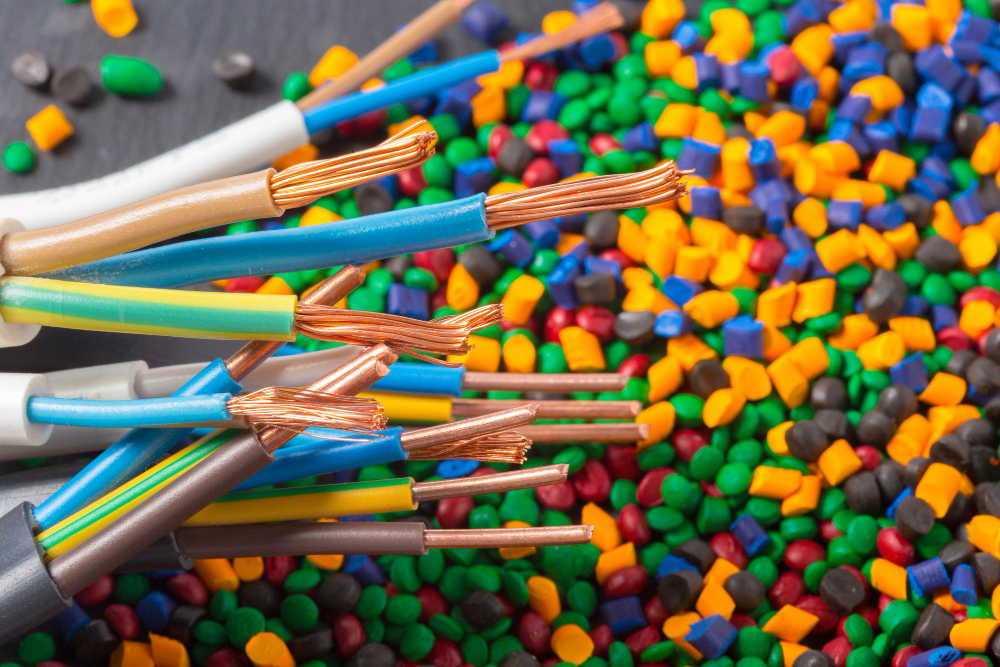
When you engage electrical wiring services in Fayetteville, NC, choosing the right type of wire for your specific project can be a bit confusing, especially with so many options available. Different types of wiring serve different functions, from carrying high-voltage power to managing low-voltage applications.
To make sure your home or business remains safe and efficient, read this post and understand the most common electrical wire types and uses today.
NM Cable (Nonmetallic Cable)
One of the most commonly used electrical wire types and uses is NM cable or non-metallic cable. Often called “Romex” after a popular brand name, this wire is used primarily for interior wiring in dry locations.
It is ideal for most residential electrical wiring needs, including lighting fixtures and outlets. NM cable consists of multiple wires wrapped in a protective plastic sheath and usually includes a hot wire (black), a neutral wire (white), and a ground wire (bare copper or green).
NM cable is versatile and can be used in walls, ceilings, and floors of homes. It is commonly found in both new builds and homes that are undergoing minor updates or renovations. One thing to note about NM wiring is that it is not suitable for use in wet or outdoor conditions. For these areas, more specialized wiring options like UF cable (Underground Feeder) should be used.
UF Cable (Underground Feeder Cable)
UF cable is designed for outdoor and underground use. It can be buried directly in the ground and is often used for landscape lighting, irrigation systems, and outdoor equipment.
This cable features a solid plastic sheath surrounding each conductor for enhanced durability, bringing greater strength and resilience compared to standard NM cable. The design resists moisture and performs reliably in consistently wet or damp environments. It serves as a dependable choice for exterior installations that face harsh weather conditions.
The main difference between UF cable and NM cable is their ability to function in damp or wet environments. UF cable is widely used in residential outdoor setups as well as agricultural and industrial applications. Proper burial depth is important to protect the cable from damage over time.
THHN/THWN Wire
THHN and THWN wires are single-conductor wires commonly used inside conduit. These are important examples of electrical wire types and uses in areas where added protection is needed, such as garages, basements, or exposed installations.
THHN stands for thermoplastic heat-resistant nylon-coated wire. THWN has similar properties but is rated for wet locations. Each wire is insulated and color-coded for easy identification.
These wires are often used for circuits that power appliances, outlets, and lighting. They can handle higher voltages and are suitable for both residential and commercial applications. Since they are individual conductors, they must be installed inside a conduit in many cases to protect against physical damage.
Low-Voltage Wire
Low-voltage wiring is used for systems that require minimal electrical power. Common applications include thermostats, doorbells, landscape lighting, alarm systems, and smart home devices. These systems typically operate at 50 volts or less.
Low-voltage wires are thinner and easier to install than standard power cables. They are often made of copper and may be insulated or bare, depending on the application.
This category highlights how electrical wire types and uses vary based on power requirements. Low-voltage wiring is versatile, but it must still match the environment. Outdoor setups should use wires rated for weather exposure and UV resistance.
Coaxial Cable
Coaxial cable is commonly used for television, internet connections, and other data transmission needs. It carries a low level of electrical signal and is designed for communication rather than power delivery. This makes it ideal for systems where stable signal transfer is more important than electrical load capacity.
The cable includes a central copper conductor, insulation, a shielding layer, and an outer protective jacket. This layered construction helps reduce signal interference from outside sources and maintains consistent performance over longer distances. It is especially useful in environments where multiple electronic devices operate close together.
Coaxial cables are often used to connect televisions, cable boxes, and satellite systems. They are also used in broadband internet setups and security camera systems. Even with the growth of streaming services, this cable remains a dependable option for audio and video connections in both residential and commercial settings.
Armored Cable (BX Cable)
Armored cable, also known as BX cable, features a protective metal sheath that surrounds the internal wires. This added layer protects against physical damage and works well for exposed indoor environments where wiring is not hidden behind walls. It adds durability in spaces where standard cable may be at risk.
It is often installed in unfinished basements, utility areas, or industrial spaces where wiring may face impact or wear. The metal casing also acts as a grounding path, which adds another layer of safety and reduces the need for a separate ground wire in some applications.
This type of wiring is selected when durability matters more than appearance. It performs well in areas with higher activity or where accidental contact may occur. Armored cable is a reliable solution for projects that require strong, damage-resistant wiring with long-term performance.
Metal-Clad Cable (MC Cable)
Metal-clad (MC) cable is similar to armored cable in that it offers an additional protective metal covering. However, unlike armored cable, which uses a metal sheath around the wires, MC cable features a full-size ground wire along with a plastic insulating sheath around each wire. MC cable is typically used in commercial and industrial settings where a higher level of protection is needed.
MC cable is particularly useful in environments where the wiring may be exposed to mechanical damage, such as in warehouses, factories, and garages. It is also more flexible than armored cable, which makes it easier to work with in tight spaces. While it can be used both indoors and outdoors, MC cable should be used with proper fittings if it is exposed to wet locations.
Get Expert Electrical Wiring Services Today!
If you’re ready to begin your next electrical project or need professional help with wiring, contact Air Pro Heating Air and Electric today. Our licensed and experienced technicians are here to offer reliable, efficient, and affordable solutions to keep your home or business powered safely.
Don’t risk your electrical safety – reach out to us for top-tier service in Fayetteville, NC!